
Overview
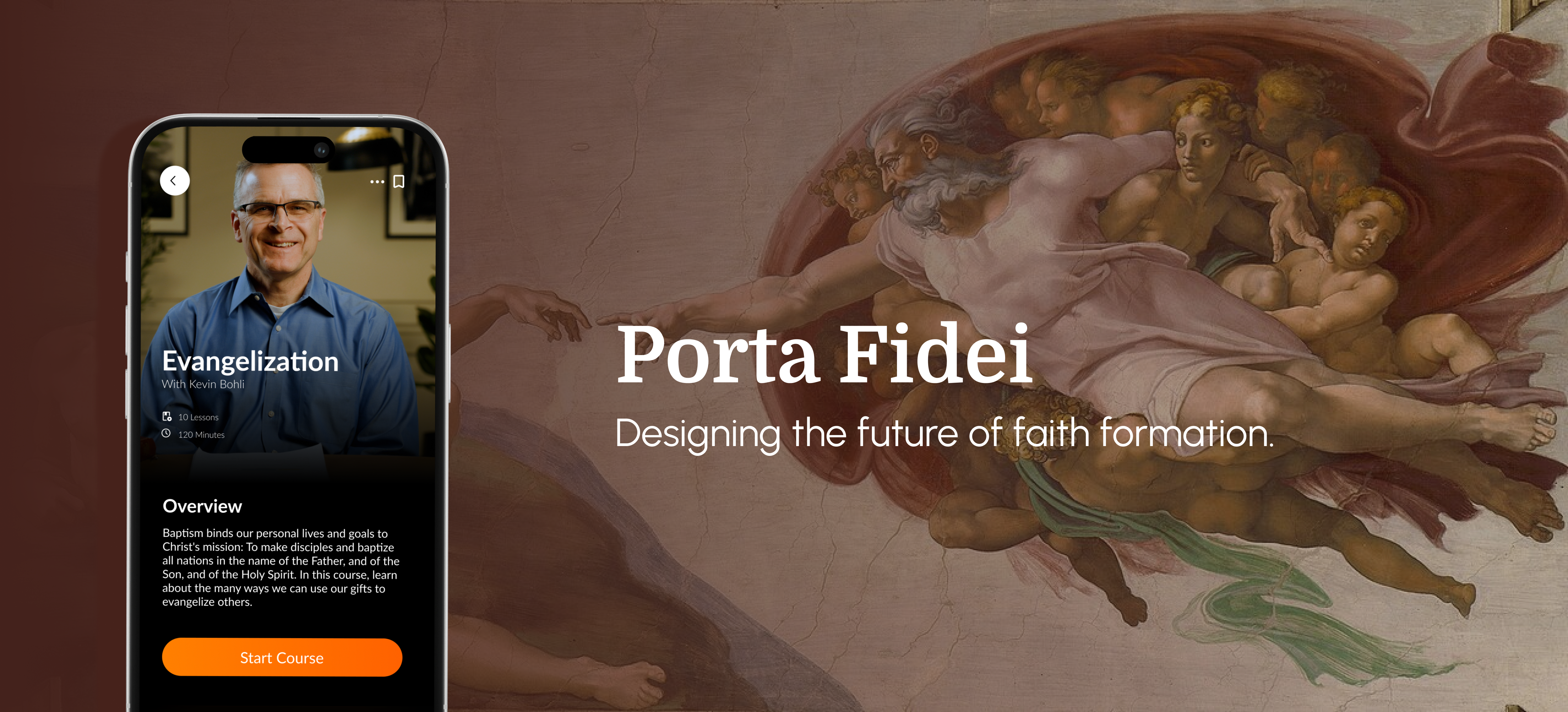
Porta Fidei is a web and mobile Catholic education and faith formation app whose creation was commissioned by the Catholic Diocese of Arlington as part of its 2022-2026 strategic plan.
The goal of this project was to inspire fallen-away Catholics to reignite their faith through insightful courses led by spiritual leaders around the diocese in a product that could compete with existing competitors such as Hallow and Pursuit of Wisdom.
Challenges
When approaching this project, I encountered three main challenges:
1. Designing for a Brand New Ecosystem
- The Church has historically been slower to adopt emerging technology, and there was limited internal data about how Catholics expected a product like Porta Fidei to work.
- Sources like Barna and the Pew Research Center documented an interest among American religious practitioners for more digital tools that can assist in the practice of their faith.
- I had to build an understanding of the audience through user interviews, competitive research, and my own familiarity with Catholic culture and institutions.
2. Inflexible Technical Constraints
- The Director of Communication committed to hosting Porta Fidei on Kajabi before the product/design team was involved, meaning the technology platform was effectively a fixed constraint rather than a design decision.
- I had to identify which aspects of the experience were worth pushing against the platform’s limitations and which needed to be adapted to the technology available while still creating an experience that felt intentional rather than compromised.
3. Aligning stakeholders around a visual and product direction
- Because the organization had limited experience developing digital products, there wasn’t an established visual language or shared understanding of what a diocesan mobile app should look and feel like.
- Stakeholders had differing ideas about how Porta Fidei should balance being recognizably Catholic with feeling contemporary and approachable.
User Personas
Our team identified three to five individuals in their personal networks that would benefit from Porta Fidei and conducted a user survey which was used to inform four primary user personas.

Persona 1
The Cultural Catholic
Occupation: Graduate Student
Age: 23
Gender: Female
Goals: Community, formation
Pains: Judgement, intimidated by the depth and scale of Catholic history and teaching
Our cultural Catholic is a young woman who has just completed her undergraduate degree and is now embarking on her new life as an adult. She was raised Catholic but her family was never particularly devout. She has recently started going to Sunday Mass again in an attempt to cultivate a new sense of community, but has discovered that her formation is lacking in comparison to her more engaged fellow parishioners. She is interested in becoming more engaged herself, but feels daunted by the scale of the history and theology of the church and fears judgement from her community for being less informed.

Persona 2
The Engaged Parishioner
Occupation: Retired Operations Manager
Age: 64
Gender: Male
Goals: Connect with diocesan leaders, expand theological prowess
Pains: Has a slightly lower level of digital literacy, needs a catalog of ‘advanced’ courses
Our engaged parishioner is a retired man in his 60’s who was raised in a large, traditional Catholic home, and continued to enthusiastically practice the faith throughout his adult life. He is retired from his career as an Operations Manager at a local mid-size business and spends his days volunteering at the parish office, teaching OCIA, and attending meetings for his local Knights of Columbus chapter. He is well connected with the various priests and leaders of his parish and nearby parishes, but desires a deeper level of connection throughout the diocese and with the Bishop. He is digitally literate but slightly slower to adapt to new tech. He is highly proficient in Catholic theology and is always excited to learn more, however he often finds himself frustrated by the over saturation of redundant information online.

Persona 3
The Young Convert
Occupation: Stay at Home Mom
Age: 28
Gender: Female
Goals: Become Catholic, raise her family in accordance with Catholic teaching
Pains: Doesn’t know where to start, still unsure of where her beliefs lie
Our young convert is a woman in her late 20’s who has recently married a Catholic man and is expecting their first child together. She was raised in an evangelical protestant family but has decided to convert to Catholicism to better connect with her husband and raise her family under one shared faith. She has mixed feelings about the prospect of her conversion; on one hand she is excited to be joining a new community, admires the aesthetics of Catholic art and culture, and feels confident her decision is the right one for her family. However, she was raised to believe certain Catholic teachings were heretical and she is struggling to fully embrace the faith in her heart.

Persona 4
The Impatient Seminarian
Occupation: Seminary Student
Age: 33
Gender: Male
Goals: Become a priest, learn as much about the faith as possible
Pains: Days are already full of long lectures, never seems to have enough time in the day
Our impatient seminarian is a man in his early 30’s who has recently answered the call to the vocation of priesthood. He is highly educated with a Master’s Degree in International Affairs from the Catholic University of America and has a high level of digital literacy. He thinks a digital faith formation platform would be of great benefit to him in his pursuit of ordination to the priesthood and is personally connected to many of the instructors on the app, however his days are already full of lengthy theological lectures, and he doubts whether he has and time or attention span remaining to engage with digital courses.
Defining Problem Statement
Catholics desire a deeper connection to their faith through digital platforms that support community, theological formation, and spiritual growth. However, busy schedules, fragmented digital resources, and uncertainty about where to begin can make sustained engagement difficult.
The Solution
- Provide users with an extensive catalog of theological courses taught by credible Catholic educators and spiritual leaders from across the Diocese.
- Enable users to engage with course content through comments and provide accessible channels for feedback, questions, and suggestions.
- Break courses into manageable segments and display estimated completion times so users can easily incorporate formation into their daily routines.
- Establish a clear flow from onboarding to introductory courses, helping users understand where to begin and reducing the sense of overwhelm that can come with a large content library.
Designs
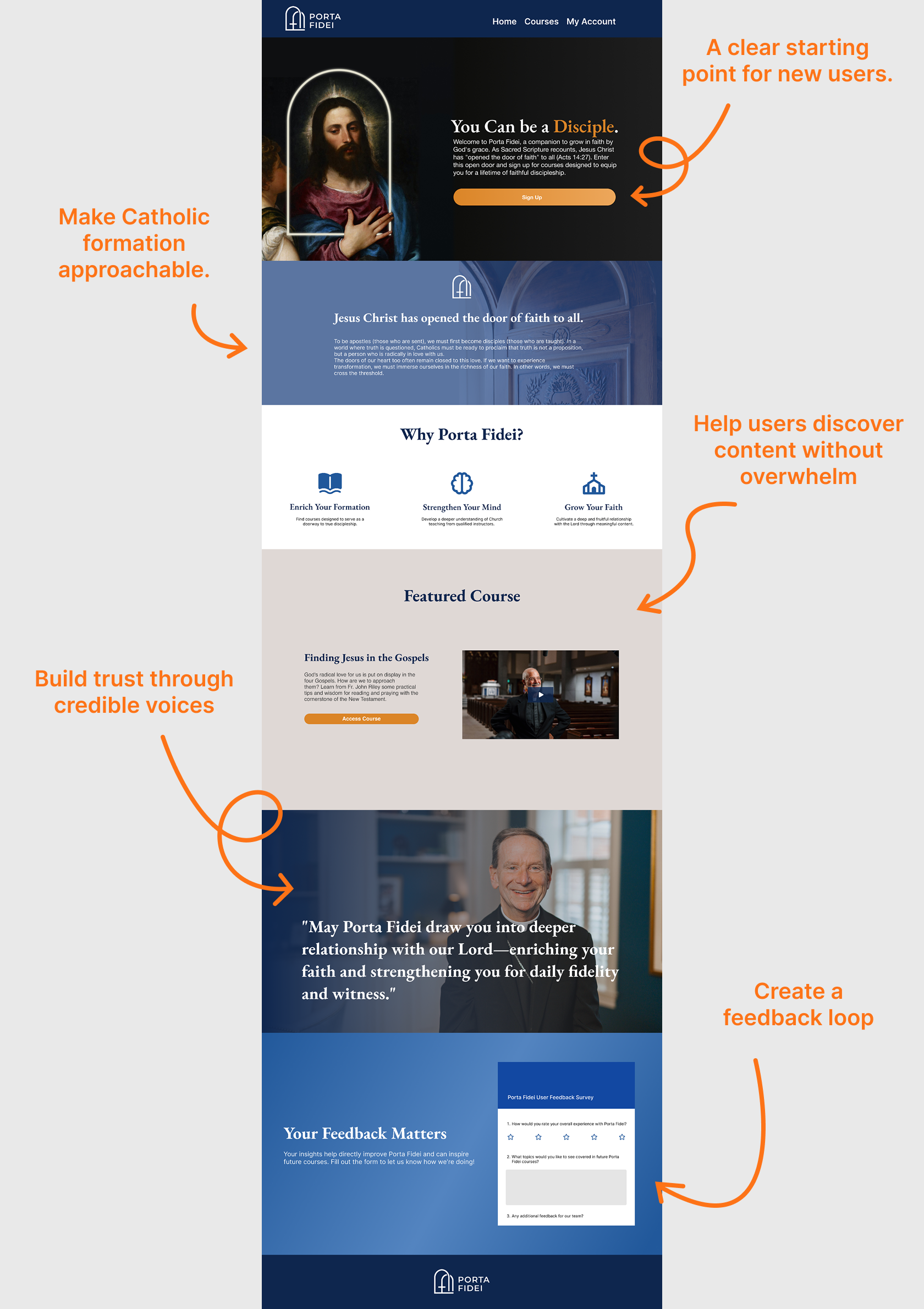
After gathering user insights, we created lofi wireframes of various versions of home pages that would smoothly transition users from account creation to their first course. After deciding on our preferred option based on internal testing, we implemented the design in Kajabi using the platform’s native editor, custom CSS, and bespoke assets designed by various team members. We then sent the page to the same group of users we interviewed earlier and conducted a usability test where they were tasked to create an account and complete the first lesson of the debut course, “Finding Jesus in the Gospels”. The finished landing page pictured below addressed our persona’s needs for a clear starting point, a digestible overview of the formation process, reassurance of credibility, and ability to socially engage through comments and feedback.
Optimizing for Mobile Users
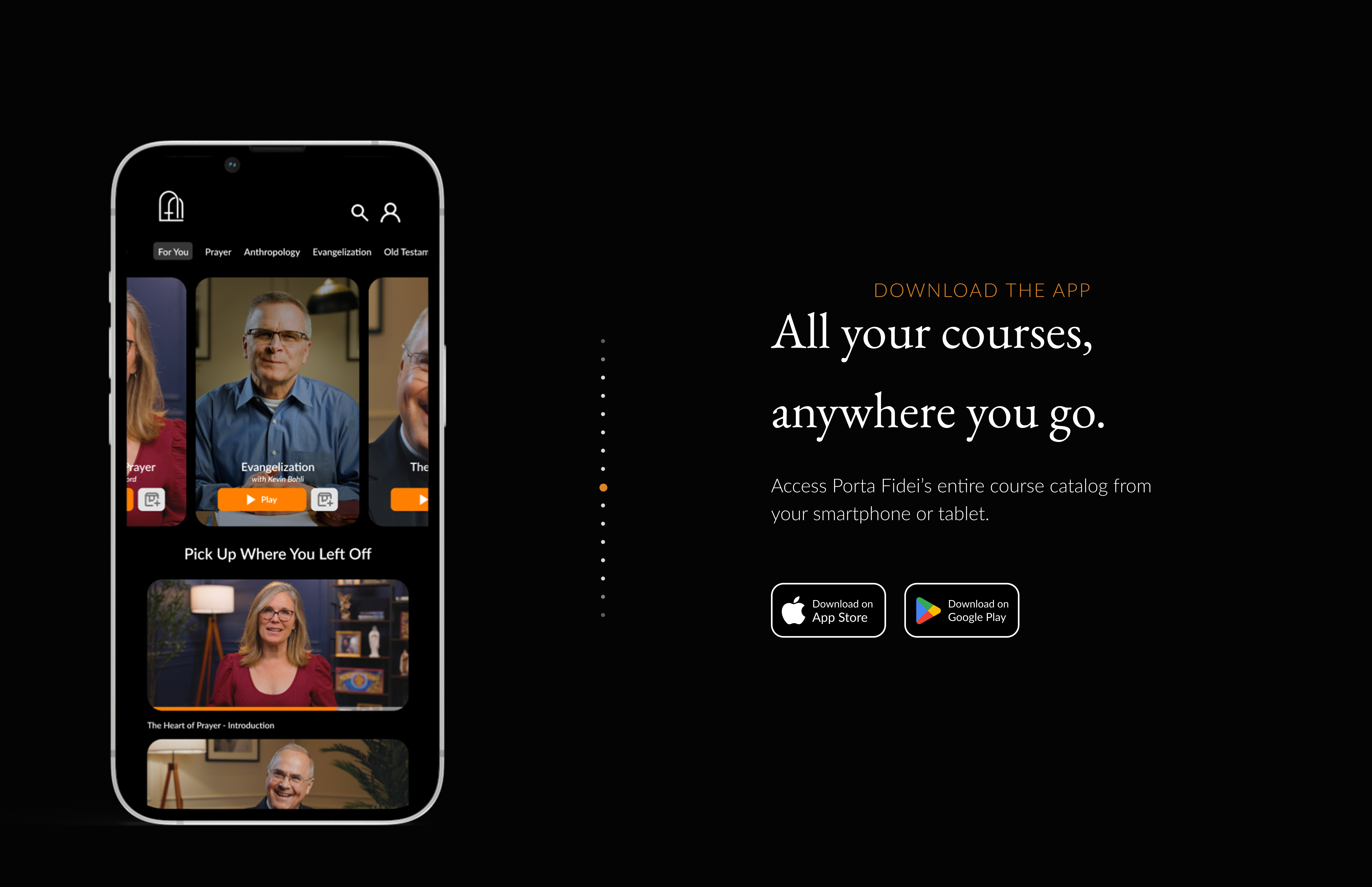
Due to the diocese’s commitment to Kajabi, we we were obliged to use to the native building blocks the platform had to offer when adapting Porta Fidei to mobile.
However, if I were able to have more control over the mobile design, I would use it as an opportunity to address our users’ needs and frustrations on an even deeper level by adding:
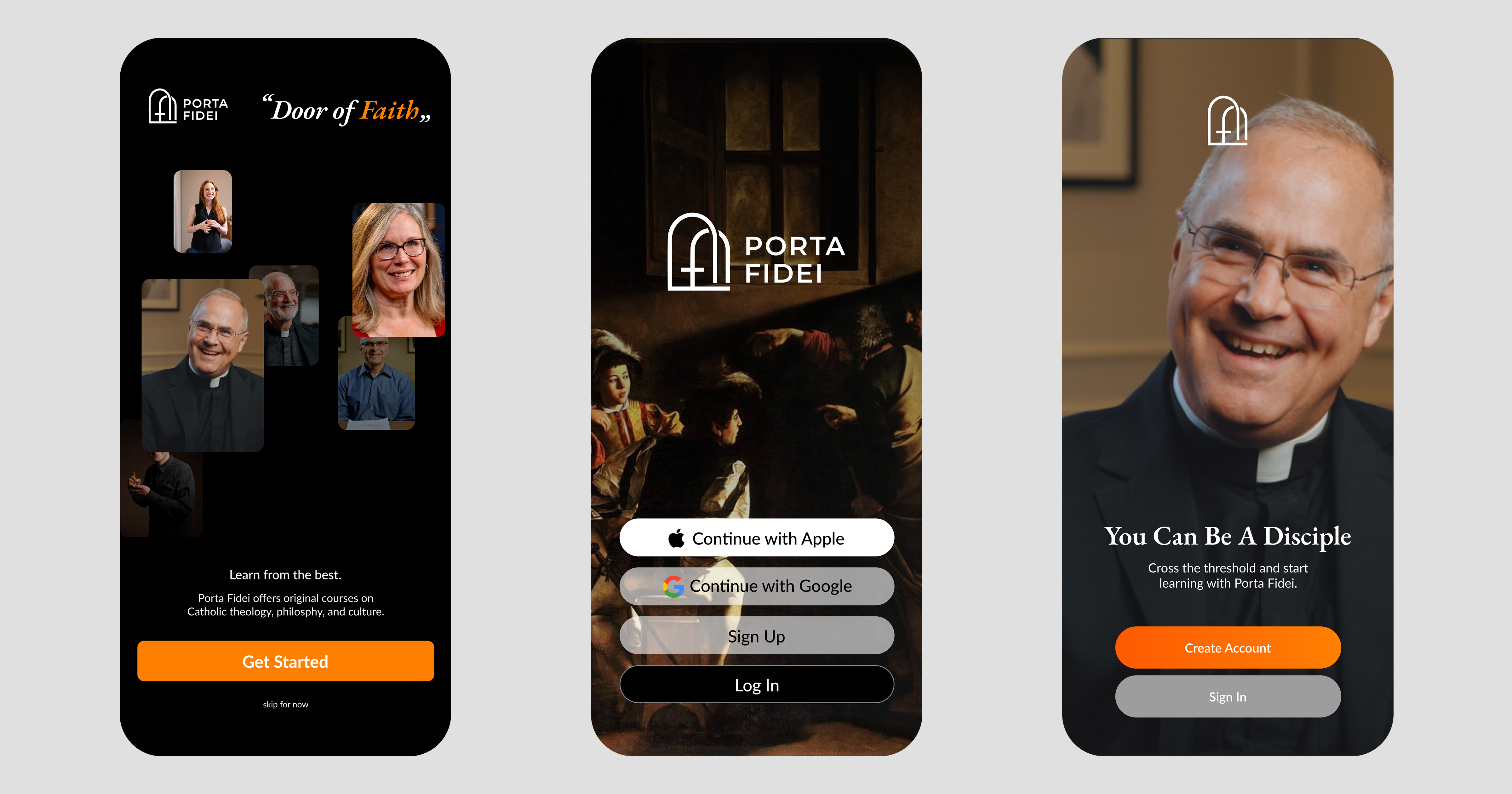
A Welcome Screen
A dedicated welcome screen would help users feel more guided through the experience while establishing the overall tone and personality of Porta Fidei. I explored three visual directions: academic and professional, classical and contemplative, and genuine and personable, each offering a different interpretation of how the platform could introduce users to Catholic formation.
A Simplified Onboarding Experience
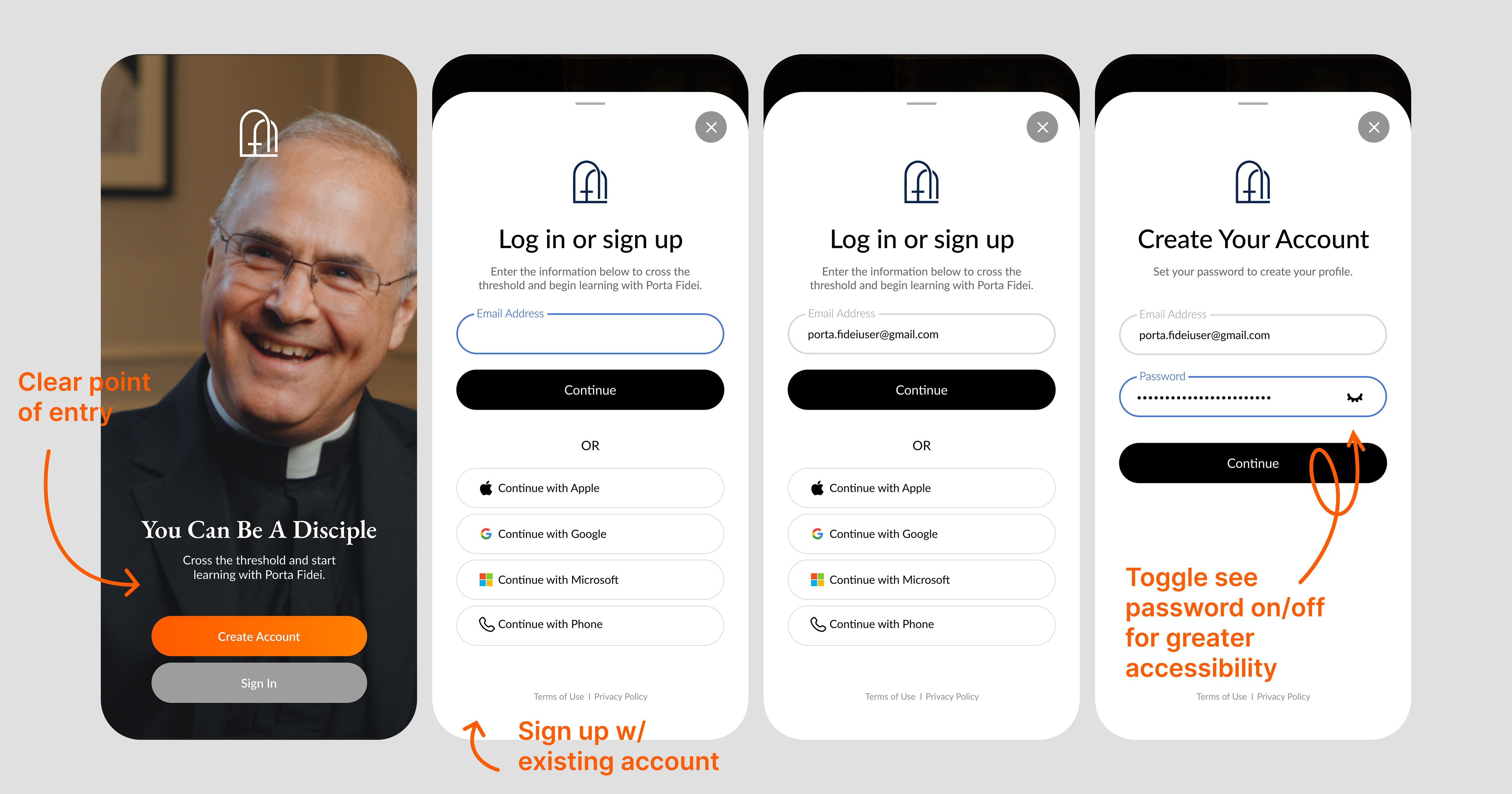
I would replace Kajabi’s course-by-course checkout flow with a single account-based onboarding experience. Because Porta Fidei’s courses are free, asking users to “purchase” each individual course introduces unnecessary friction and makes the experience feel more transactional than it actually is. Kajabi’s standard Offer flow treats each course as a separate transaction, with checkout and account-creation steps built around that model.
Instead, users would create an account once using their email, phone number, or an existing account such as Google, then gain access to the entire Porta Fidei library. From that point forward, enrolling in a new course would require nothing more than selecting Start Course. No repeated checkout, personal information, or account setup.
Fast Course Enrollment
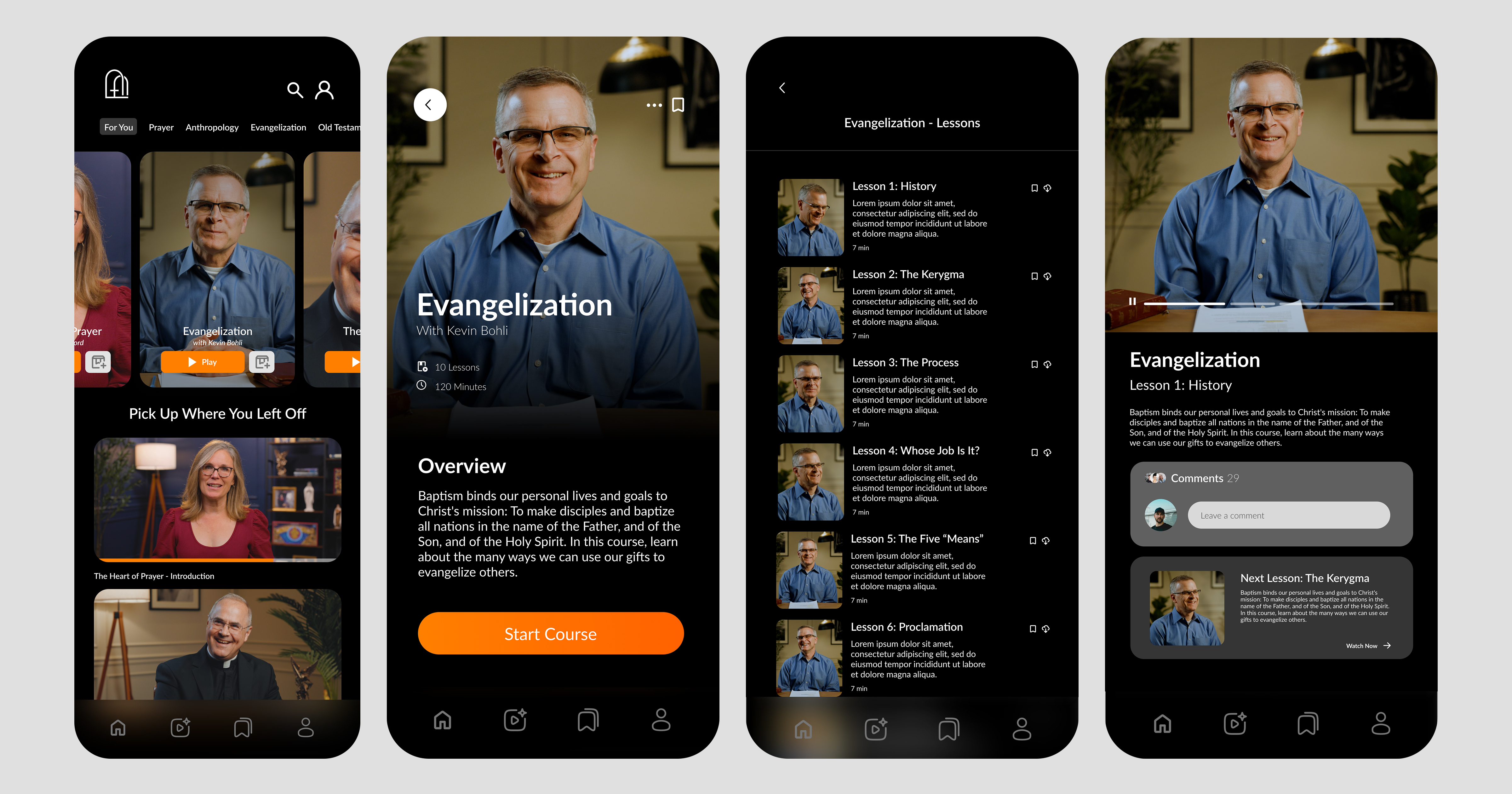
Once users have created an account, enrolling in a new course should be effortless. Because Porta Fidei’s courses are freely available, requiring users to move through an Offer/checkout flow each time they want to access a new course adds unnecessary friction to what should feel like an open learning experience. Kajabi’s standard Offer model is built around packaging and delivering products through an Offer and checkout flow, even though free Offers can be configured.
I would instead allow users to select Start Course directly from the course catalog or course page. Once selected, the course would immediately be added to their library, allowing them to begin learning without re-entering personal information or navigating a checkout process.
Results & Takeaways
After sending the live site out we surveyed our initial test users to gauge how successful we were in meeting our users’ needs. Below are some of the results we found:
Results
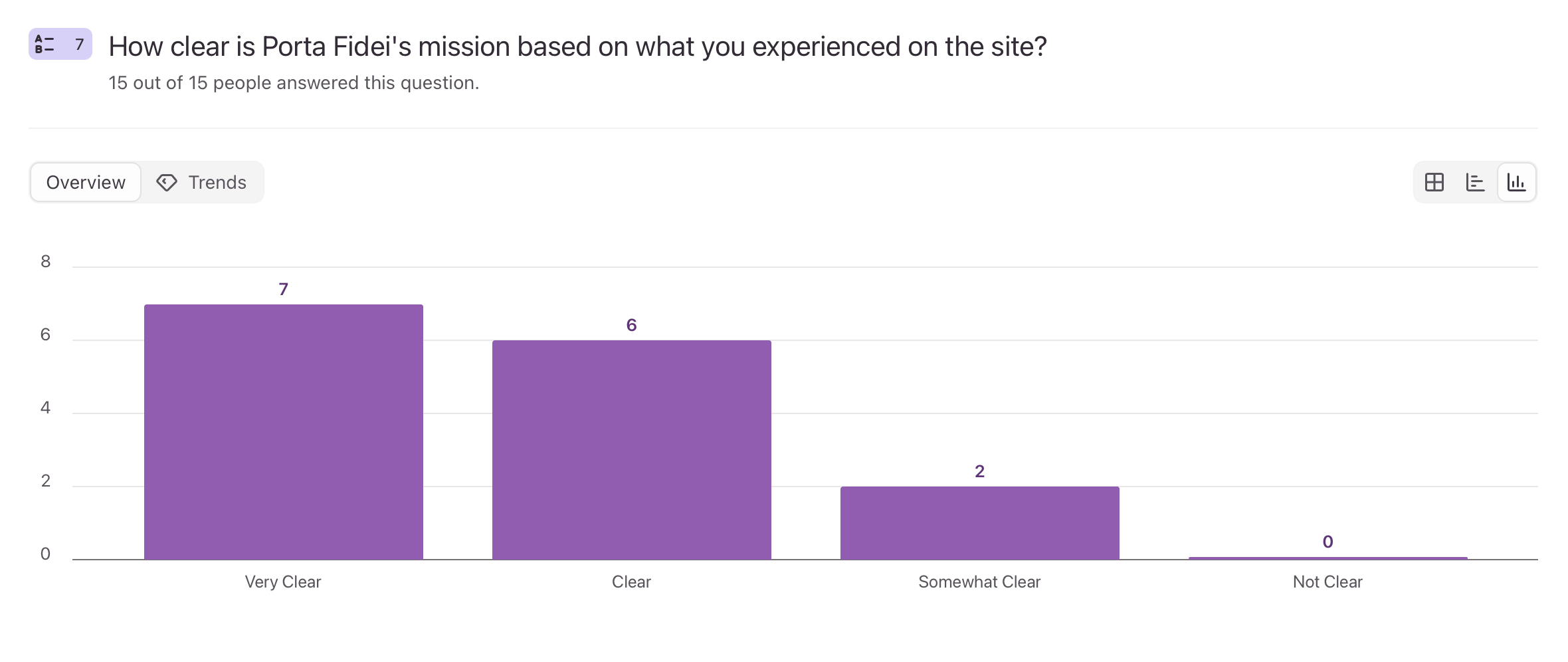
Survey results indicated that users overwhelmingly understood the mission and goal of Porta Fidei as a product.
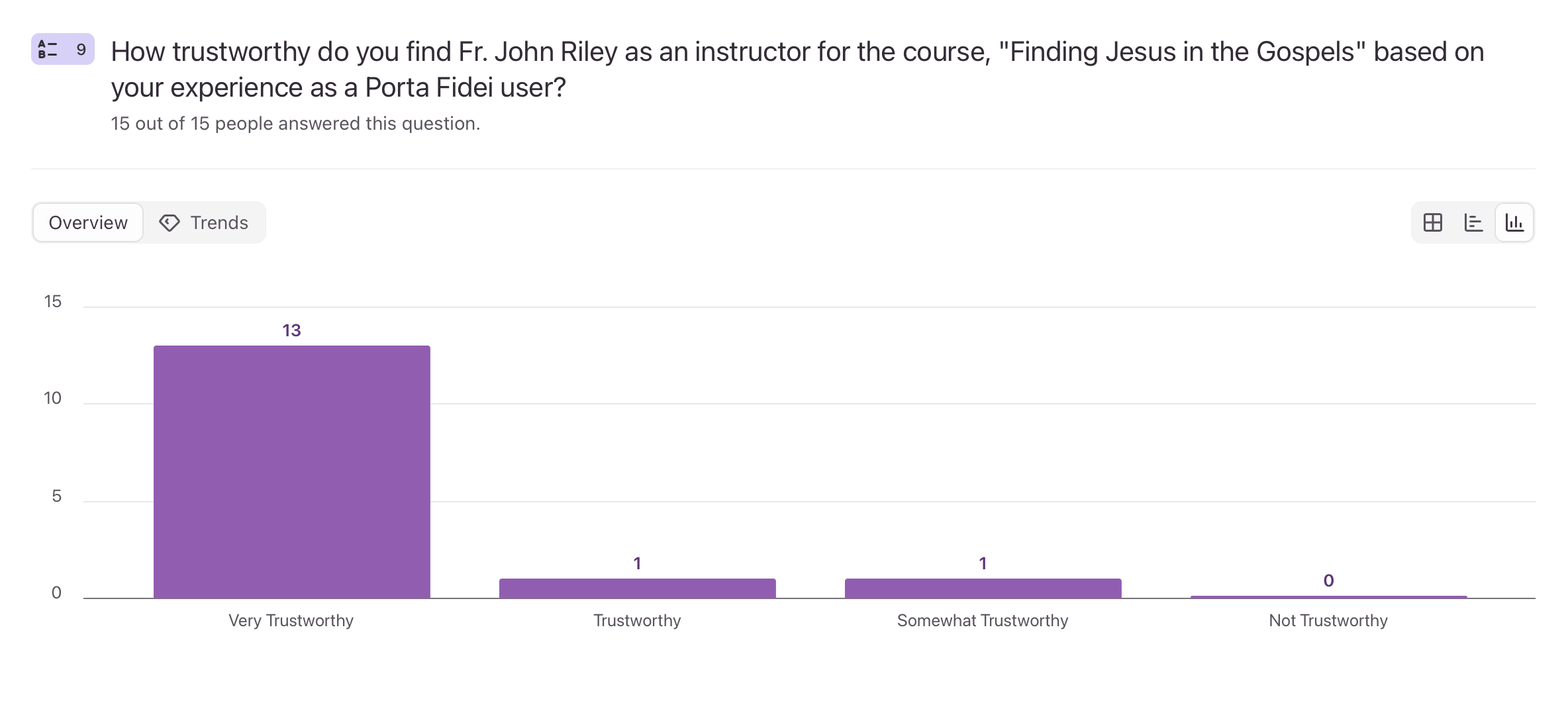
Our users were also overwhelmingly trusting of the instructor featured in the debut course.
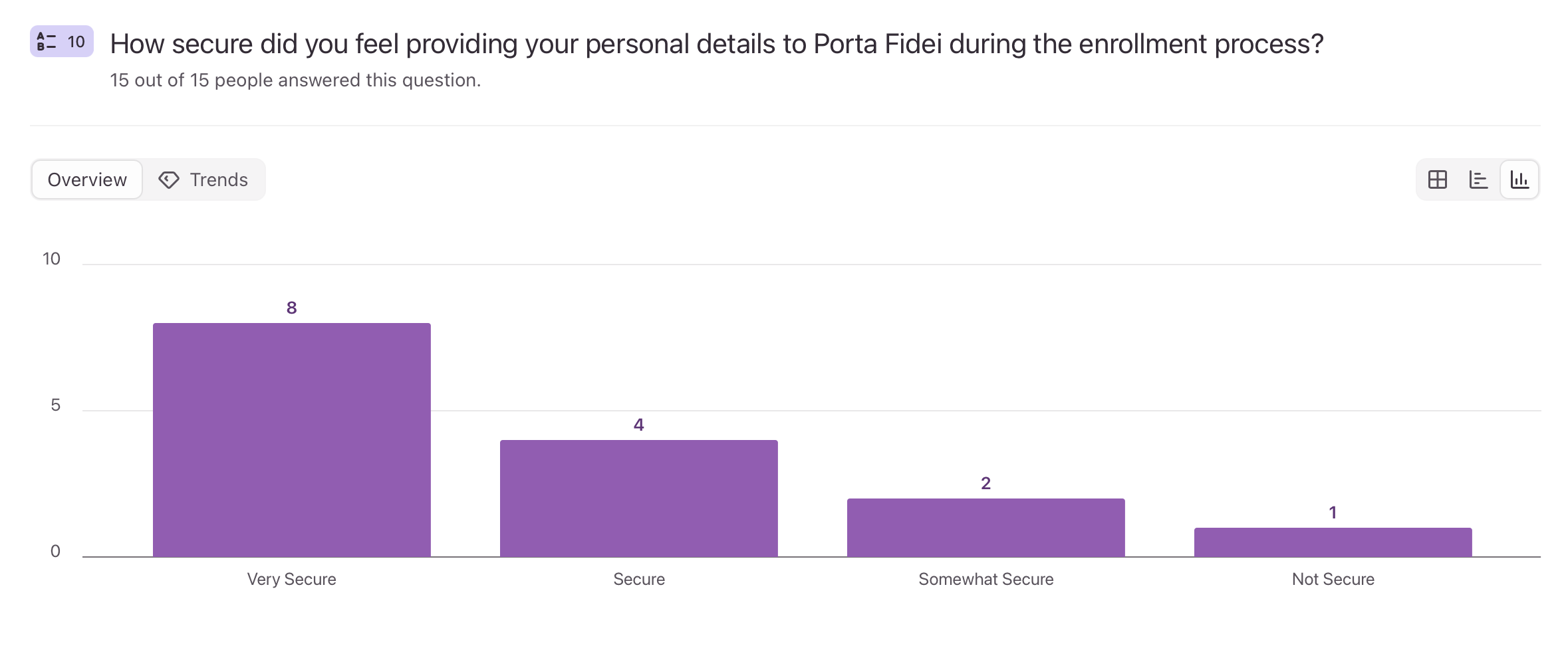
One result that struck me was that nearly 50% of surveyed users indicated some level of hesitance about the security of the app. This led me to wonder what our team could do to make users feel more secure, such as:
- Explaining to users why we are asking for each piece of information
- Briefly explaining the privacy policy at the moment of collection, then linking to the full privacy policy
- Offer recognizable authentication options (as demonstrated in mobile mockups)
Takeaways
Porta Fidei challenged me to think beyond designing screens and consider how technology, user needs, organizational context, and faith formation intersect. Working within the constraints of an established platform meant finding creative ways to build a useful and approachable experience, while user research helped me understand how Catholics might engage with digital formation in their everyday lives.
The project also taught me the importance of designing for the real context in which a product will be used. A successful faith-based platform cannot simply replicate the structure of a traditional course, it needs to meet users where they are, respect their limited time, establish trust, and give them a clear path forward.
More Projects
 Lauren Dravis — Product Designer